
I’ve seen lots of general aviation aircraft up close and personal. The only identification plates I’ve noticed on the exterior of the aircraft are on Beech aircraft. Has anyone seen the identification plate on other aircraft located as per the regulation quoted above?
[quote=“damiross”]
I’m embarrassed to say that as many times as I’ve preflighted several different Cessna airplanes, I don’t know where the numbers are located on them… 
Then again, there’s nothing on the checklist instructing me to verify its presence. 
They’re supposed to be there… I’ve seen them all over the place around the empennage, some very small and obscure, and some even painted over, which they’re not supposed to be. One day I was looking for one on a G-IV…all over the tail section I was looking where I’d seen them before on that type. Finally found it at the lower aft corner of the entry door…I guess that one met the requirement of being at the “aft most entrance” even though the entrance, the only entrance, is on the forward section of the aircraft. 
On some small older airplanes I’ve just seen a little bitty piece of aluminum riveted to the skin by the tail tie-down ring that looked like the info was etched on with a scratch-all.
Steeling a GA plane, how low can you go ? I bet this is for spare parts ? That’s how the East-European thieves steal cars here in West-Europe, they have an order list of types/colors, for the spare parts, somethimes only parts are stolen (airbags, …)
So i would also investigate the current owners of this type of plane who have already a criminal record… bonus fortuna!
Just curious, was there a reason you were looking for the serial number, like were you purchasing the plane?
Until this thread came up, other then the standard check for liens and prior accidents, would had no earthly idea to be looking for serial numbers.
I know the engine logs have a serial number, but don’t / didn’t realize the airframe had a serial number tied into it. Looking at my own plane info…
1976 BEECH C23
Fixed wing single engine
(4 seats / 1 engine) LIEBERMAN ALLEN
BRANDON, MS
(Individual) Standard/Unknown **M-1830 **
Aircraft Details
Engine Weight Speed Mode S Code
LYCOMING O&VO-360 SER
Horsepower: 180 (Reciprocating) Less than 12,500lbs 116mph 50274723
Registration Details
Status Certificate Issue Date Airworthiness Date Last Action Date
Triennial mailed 2002-12-12 2005-12-20
M-1830 indicates the serial number of my plane. I wouldn’t even know where to begin to look. POH will be first place  one would think, but who knows!
I am probably shooting in the dark on this, not really good as an owner of an airplane, but where does one look to ensure all serial numbers are documented inside the logs? By this, what equipment is required to have a serial number besides the obvious, like nav coms, xponder and such?
Everytime I had equipment swapped out, I got a return to service yellow tagged card giving me serial numbers on component worked on, and all I do is staple it inside the log book so it doesn’t get lost.
What is suppose to have a serial number and what isn’t I guess my question would be. Heck, I think even the cylinders have a serial number of sorts if I remember correctly??? I’d have to check the log book to see.
On a similar note, I do put a ton of faith on the wealth of knowledge the A&P has over my knowledge in the 6 years of ownership of N1943L, and while somewhat not good, but truthful, as long as he signs off that all AD’s were complied with in the logs after every annual, I take it at it’s word.
Technically, the pilot is required to ensure all AD’s were complied with, amazingly enough as it’s the pilots determination for airworthiness, and truth be known, how many pilots do check the logs before launching to ensure all AD’s have been complied with especially rental airplanes.
Allen
Uh, there’s a whole bunch of people out here in the real world that use the serial number to keep track of aircraft. While it doesn’t specifically mention it, many spotters use the serial number as one piece of data on identifying aircraft. It’s an easy way to determine if you the aircraft you just spotted and/or photographed has changed registration.
Personally, I use the serial number, along with the registration and other identifying data, to keep track of the aircraft I have flown in. Additionally, my collection of airline slides contain the serial number because, as mentioned above, it’s the only way to be sure that the aircraft with two (or more) different registrations is the actually the same aircraft.
By the way, it’s not just civilian aircraft but also military aircraft that spotters want serial numbers of.
Let me rephrase my question, as I don’t think azav8r was spotting planes.
I was asking azav8r why HE was searching for a serial number on a particular plane that I am making the assumption he was going to fly as a pilot in the real world as you say.
Maybe it’s a requirement in commercial ops that I don’t have to do in part 91.
Or just maybe he is doing something I should be doing myself on my private plane, thus me raising the question.
Allen
Serial numbers are the only reliably way to manage aircraft in a database since the N numbers change so regularly. The FAA publishes the corresponding Serial:Ident and you can match 'em up.
'preciate the reply and this makes perfect sense, but from a pilots point of view, do others check the serial number against the tail number.
I kind of parallel this to the AD example above, I trust my A&P to be sure all AD’s were complied with when he signs the log and returns the plane to service, and I would have never thought to be sure the serial number matches the N number as part of my preflight especially on a plane I may rent (airworthiness in ARROW includes that AD’s have been complied with).
I know this is a nit pick thing, as the real world is quite a bit different, my curious mind wonders (probably too much!).
And like I said before, I wouldn’t have even thought to check the serial number no more then I would check the VIN in a friends vehicle that I borrow.
Allen
In this example I was curious about its general age. If you are familiar with a particular aircraft’s production run, you can get a feel for how old the airframe is by the S/N.
Not a bad thing to know where it is located on your airframe…
Definately good things to know for tracability, and insurance. Check your logs, and all other docs you may have. Again just about everything has to have a P/N and S/N to meet TSO and PMA requirements.
A very good plan. Again very important for airworthiness, tracability, and enhancing value by being able to account for everything.
Just about everything… When your talking about transport category aircraft, stand-by…serialized components, including just about every little component in a turbine engine has a serial number…it can encompass volumes of paper…
Just a few pictures I already had uploaded, but the answer to your question is yes.
Little white rectangle just underneath the horizontal stab:

Just aft of the baggage door:

Black square just ahead of the horizontal stab.
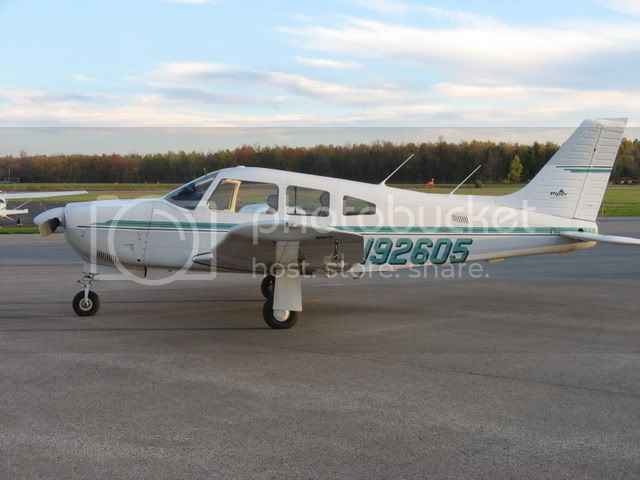
I can’t quite make out the second to last digit on that plate, is it ‘Z’ or ‘2’ ???