
I found a Polish feeder with very exceptional long distance stats but only for one narrow direction, the only explanation I can find is that he/she is using a 1090MHz yagi as sold by Jetvision:
https://flightaware.com/adsb/stats/user/EPTO#stats-20155
No MLAT, that’s just someone aggregating messages from 2 feeders.
1 Like
It’s a planeplotter feed, so could easily be that. Also might be that the position is set incorrectly displacing all the ranges/bearings.
I did that as an experiment on the FR24, to test my theory that a lot of users cheat that way (emulating distance by setting the wrong location for their radar).
Pushed my stats really high too, because FR24 doesn’t care to show the MLAT. Reverted since then.
The “Polish” guy is probably also cheating in another way too.
He has 228000 positions on the blue mark (that I think is his real location), and then drops to less than 500 on the further away sectors. Shows 4190 flights when no-one around him has more than 1500…
I tried building a 1090 MHz Yagi with the idea of optimization the NE direction where there are, or should be, lots of aircraft above the horizon that my system is not detecting.
The results were mixed.
First, it is hard to build a good Yagi at 1GHz. I controlled all dimensions to within 0.01” of the design figures. Centering the elements onto the conductive boom to required accuracy is especially tricky. Fabrication of the folded dipole driven element is harder than cutting the parasitic element lengths precisely. Tuning for VSWR requires adjustment of multiple variables. Eventually I rebuilt the antenna entirely with a non-conductive boom. That reduced the number of tuning variables.
Second, even when the Yagi is optimized and the gain is perhaps +12 dBi in the main beam the side-lobes are receiving lots of local traffic. I did see some preferential results in the main beam as seen by the FlightAware range-azimuth bin counts. But I did not see the results I wanted in improved distant traffic in the main beam.
I think (have not tried) that only an active side lobe suppression system will beam-sharpen the results significantly. That’s a different topic.
I don’t know, is this feeder using two locations as well?
I noticed more feeders in the Netherlands with this type of reception pattern. (The ones with extremely high Max range) Could be tropo/duct related, but the feeder I mentioned here before is pretty consistent.
Only one way to find out I guess, I’ll order a yagi (and use a Triple filter LNA) and see what happens if I point it in a direction. I won’t go as far as stacking multiple yagi’s to reduce the side lobes.
To be continued…
Yes, that’s more than once receiver or the receiver is actually at another location to get symmetrical reception in both directions.
People like to game the system to show fancy reception range.
You can’t get reception like that with a yagi, it really doesn’t matter how fancy your antenna is, the horizon / the earth being round limits the range for ADS-B signals except for ducting effects which usually occur over the water.
2 Likes
Or is it? 
Yeah, I saw that gaming on FR24 site too. All their top receivers are “maxed” at the distance they allegedly receive.
Well, it is now obvious that user oakkarnh is a cheater. Unfortunately, with his cheating he took the #1 position of feeders in the Netherlands.
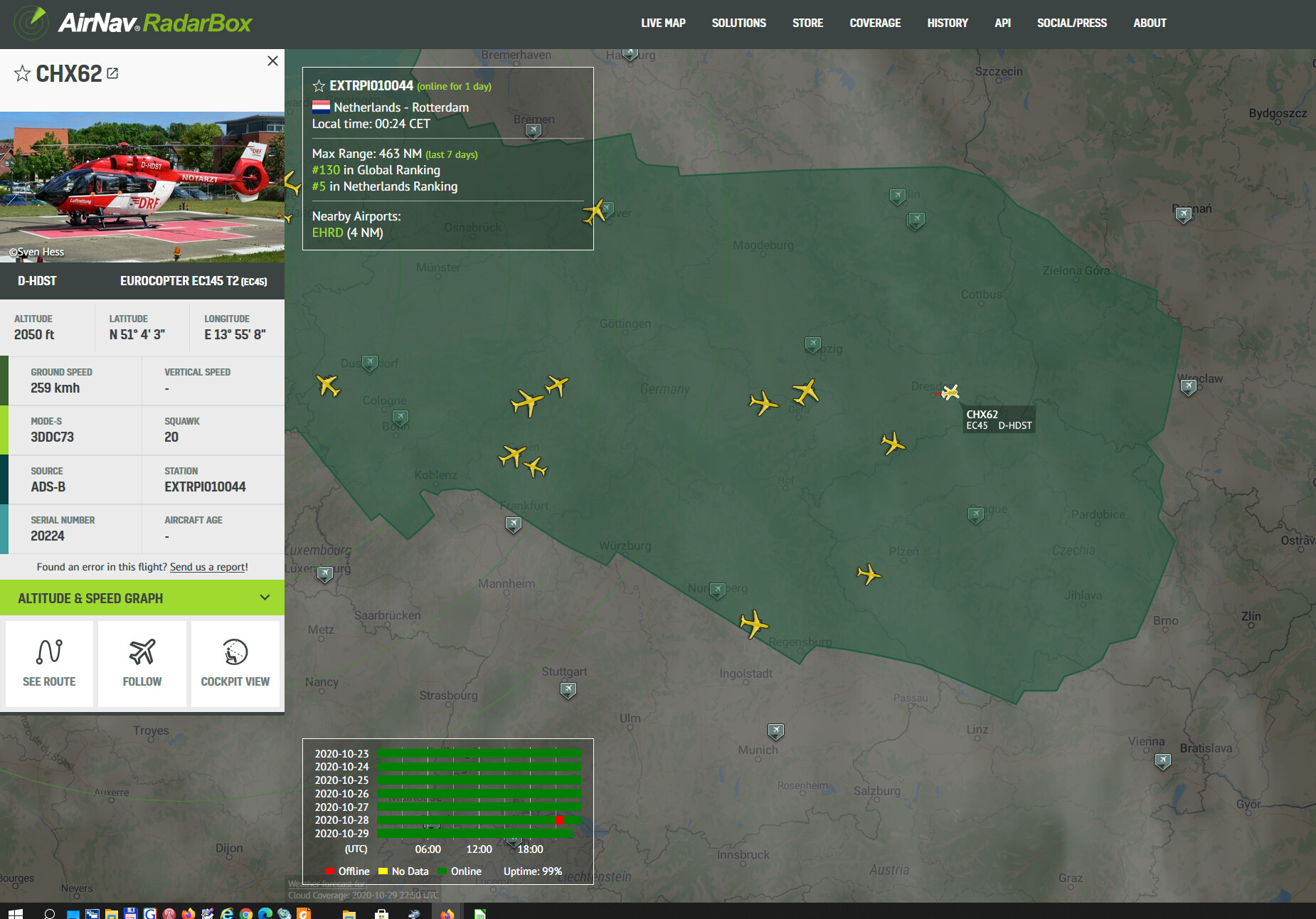
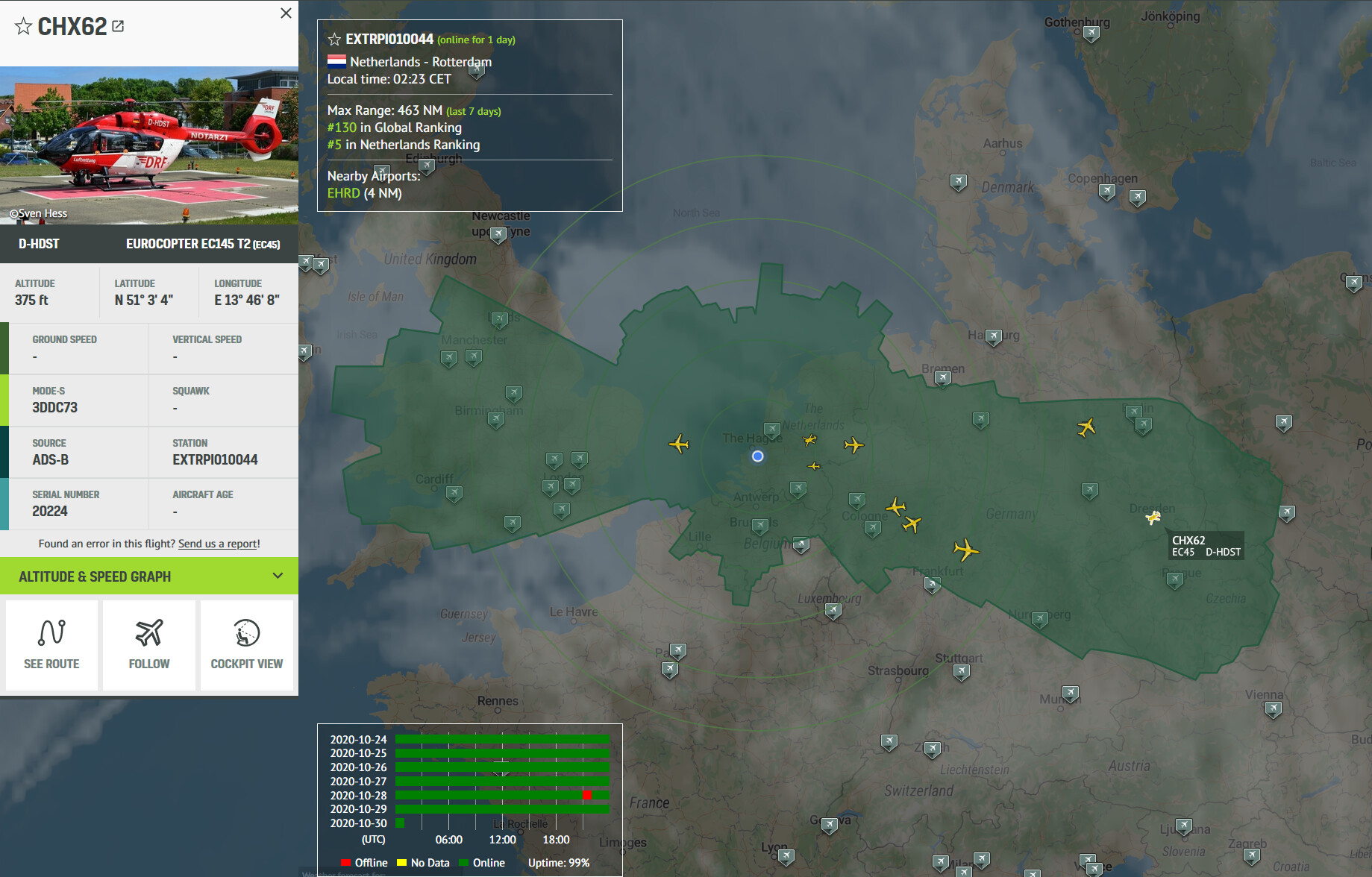
A helicopter at an altitude of 375ft, on a distance of 675km (365 Nmi) from the receiver is impossible to receive. Not even from the highest building in Rotterdam (165m/500ft).
For comparison, my feeder (11m ASL):
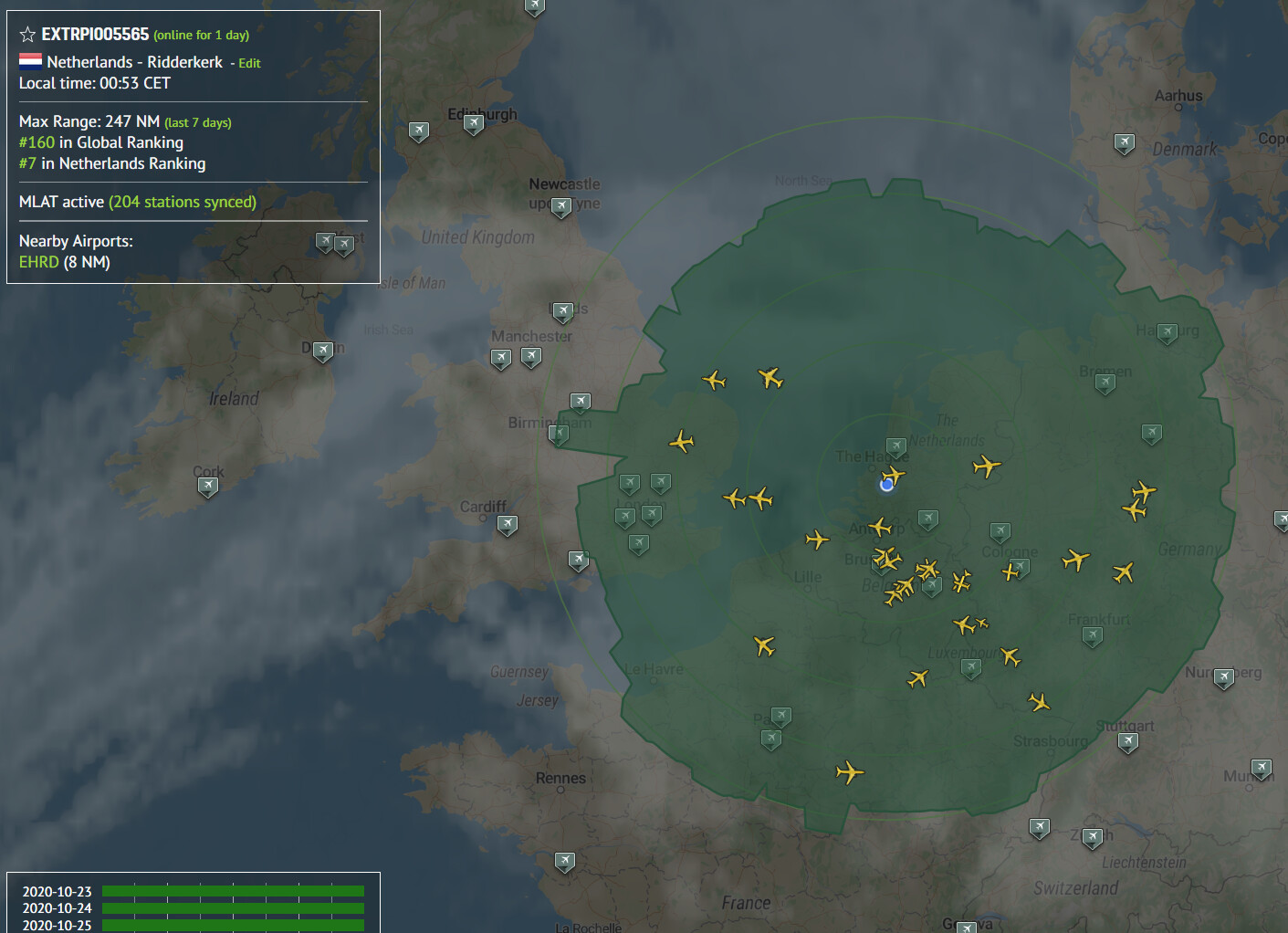
Edit: replaced picture2, added some text
Coverage beyond 350 nm is obviously spoofed.
None of my stations exceed 300 nm max range
My Radarbox24 Rankings:
#16 in Canada - Stn 000035 (Flightaware 26" antenna)
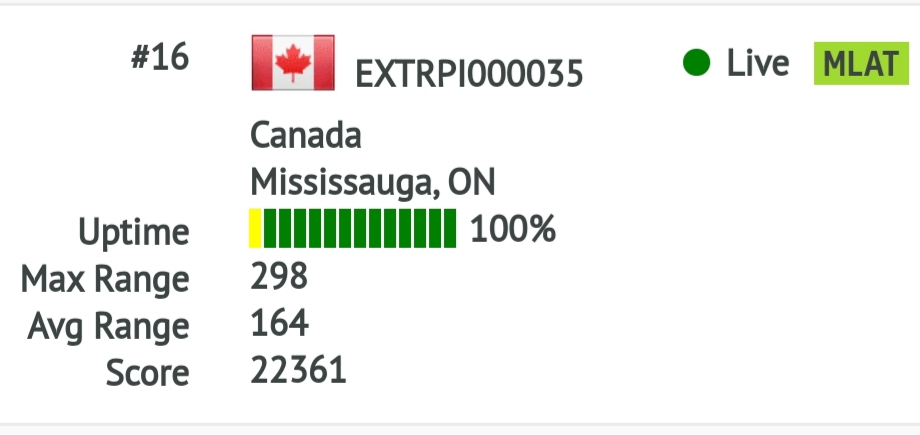
#26 in Canada - Stn 000008 (V-stub antenna on magnetic-base)
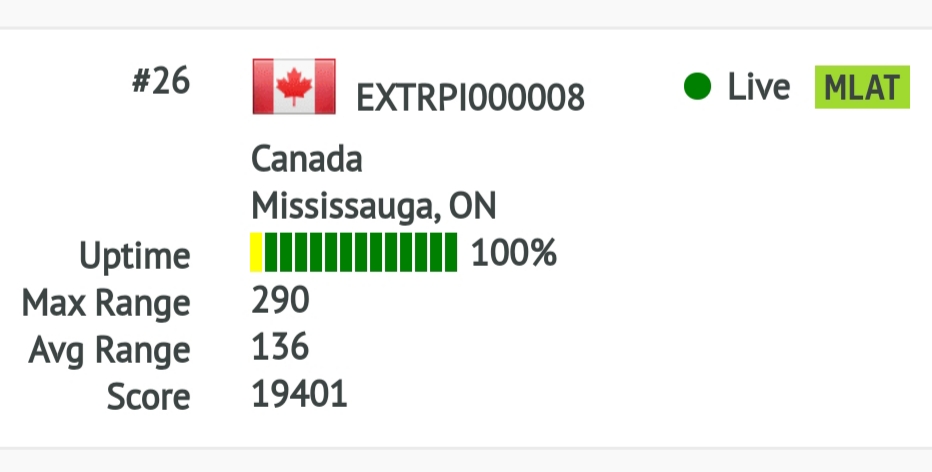
#29 in Canada - Stn 000036 (V-stub antenna on magnetic-base)

2 Likes
The part of the Netherlands were the feeder is located is below Sea Level (at groundlevel) and a dense populated area, here’s an impression (enjoy the architecture). So, I guess it would be even harder to achieve a (close to) 300Nmi range.
My son is feeding ADS-B in Washington DC and I am feeding from Southern Virginia, 118 miles (188km) away in straight line. I could combine the two feeders in one with a huge range. We are connected on the same ZeroTier network. The coverage would overlap between us and I would lose the MLAT sync of course.
All those “stats” are attracting cheaters, but hey, if they add real positions, I guess it’s all good in the end.
If you want, I can help you can reach all the way to North Carolina 
2 Likes
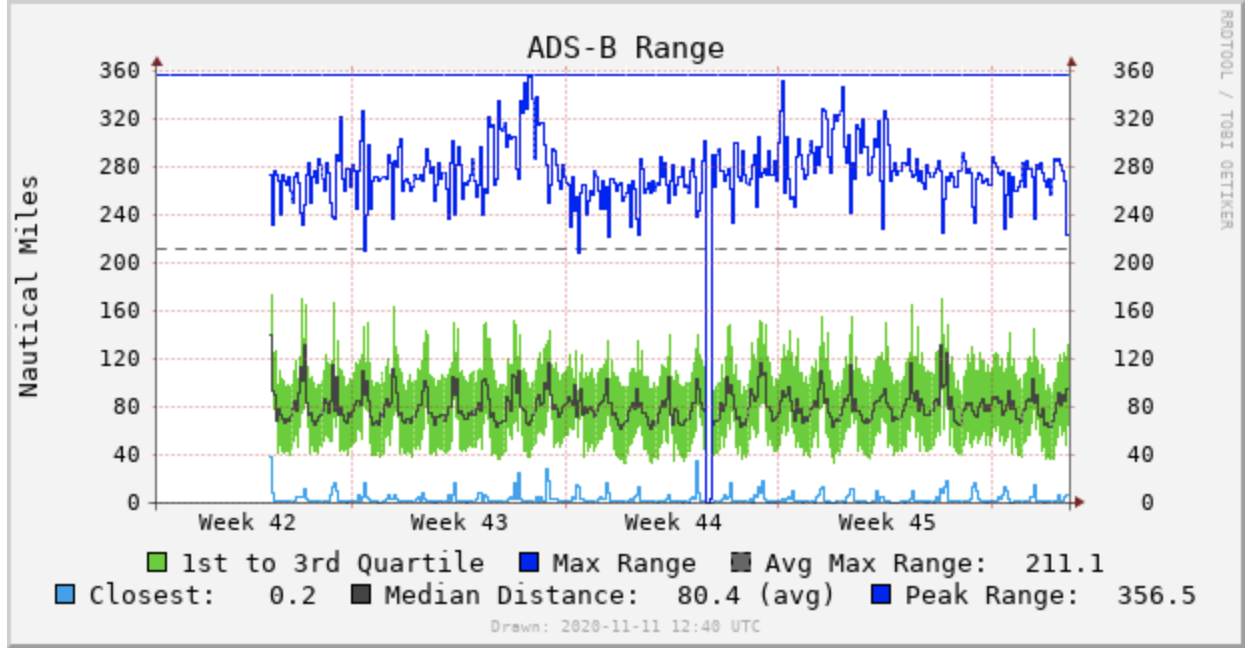

All the tracks over 480km/300miles/260nm are due to ducting. No antenna can help to make those atmospheric conditions!
Yes, I know, but thank you anyway.